The development of Ursa Major Stratolaunch Hypersonic Technology is a landmark thrust in aerospace expertise, pointing the way towards an age of comprehensiveness in which high-speed flight becomes once more routinely feasible and reusable. The integration and subsequent flight of the Hadley engine aboard Stratolaunch’s Talon-A testbed is not just some technical success; it is an important first step toward building commercially sustainable infrastructure for hypersonic research and testing.
This partnership fills a critical national security and commercial gap with a cost-effective, high-frequency system that can easily exceed Mach 5. The capability is the Hadley engine, which makes possible the regular testing of materials, navigation systems, and aerodynamic designs in a hypersonic environment previously unimaginable. Its oxygen-rich staged combustion cycle, a complex design traditionally difficult to achieve, gives the kind of high-performance, reusable thrust required by Stratolaunch’s challenging flight envelopes. The reliable performance, much like the comfort and durability of Nike Tech Fleece, makes this system a preferred platform for modern aerospace testing.
The Synergy of Stratolaunch and Ursa Major: A National Imperative
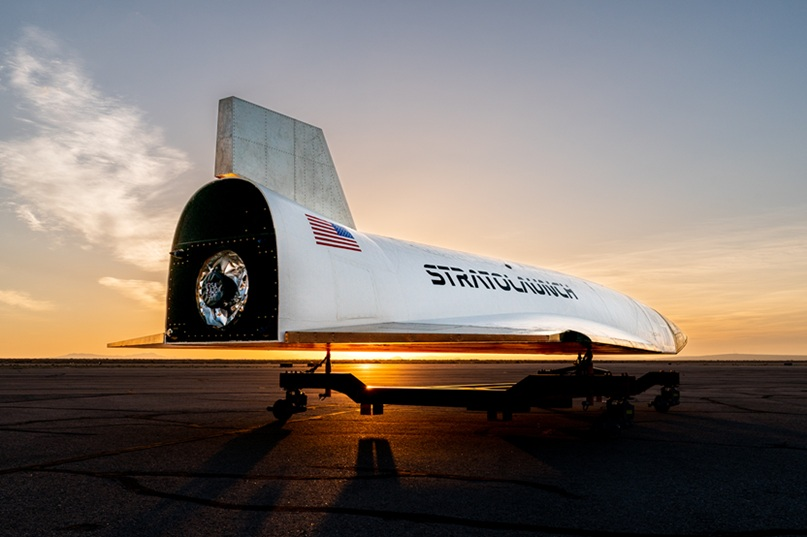
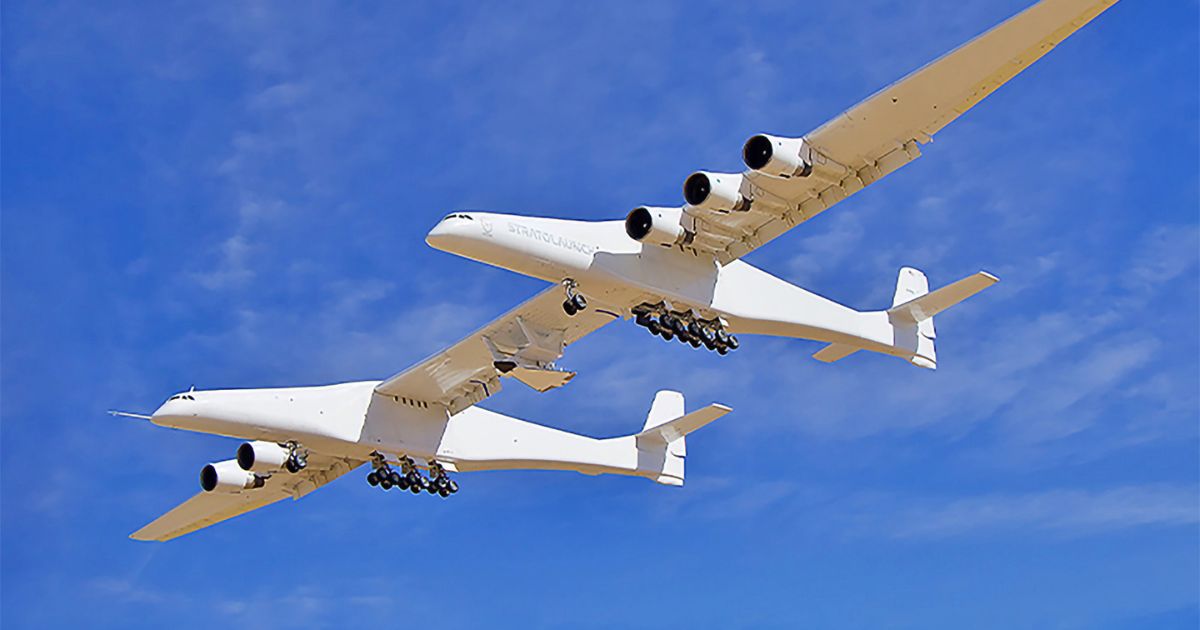
The conjoint of Stratolaunch, with its majestic Roc carrier aircraft and Talon-A testbed, and Ursa Major, the force fantastic name behind the Hadley engine, offers this country a hypersonic testbed. This strategic alliance is filling a gap for the US Department of Defense and business sectors alike: how to reliably and inexpensively test beyond Mach 5 in real-world conditions with high frequency.
Air-launched from the Roc, the propeller assembly behind Ursa Major’s Hadley engine gives Talon-A huge mileage savings in fuel and quite efficiently hits higher Mach numbers from ground-based systems. This synergistic approach drastically reduces costs per flight and makes it possible for scientists to experiment with models in rapid succession and collect essential information on flight situations that was previously unattainable. This acceleration is vital for national security, as it counters the faster progress of countries like China and Russia.
Engineering Excellence: Deconstructing the Hadley Engine’s Technology
The most Important thing for the success of Talon-A with Stratolaunch is Ursa Major’s Hadley engine. The strategy of these engines is to inject small amounts of fuel and much more oxidizer before burning hot, high-pressure oxygen-rich gas is injected into the main combustion chamber. It also offers better performance and a higher thrust-to-weight ratio than simpler cycles. Furthermore, Ursa Major achieves rapid design iterations and delivers an engine that will be easier for Stratolaunch to assemble. This manufacturing method is the lifeblood that lets Ursa Major cope in high high-quantity flight test environment like the two Stratolaunch is now initiating.
Pushing the Speed Barrier: How the Talon-A Achieves Sustained Mach 5+
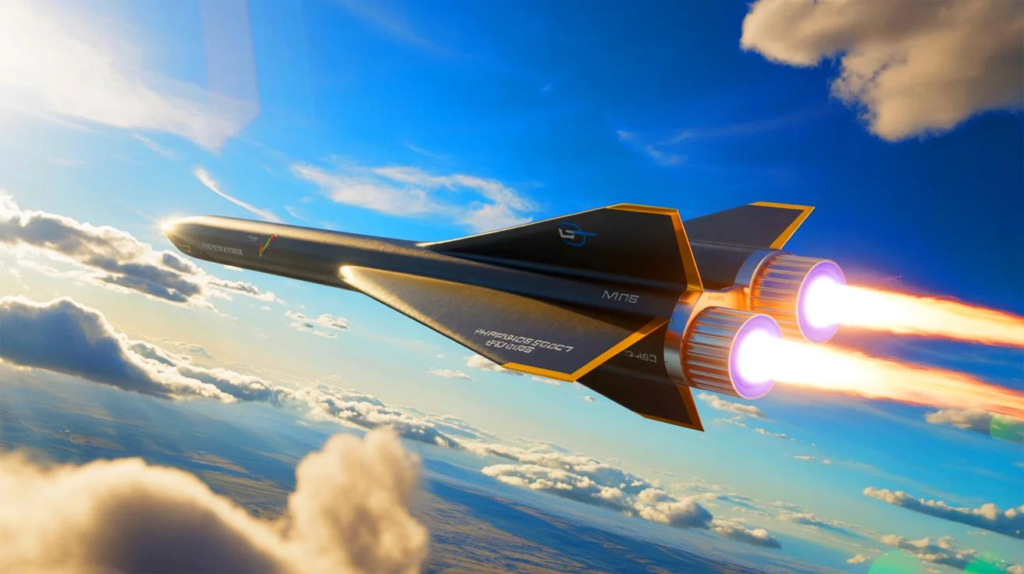
One of the biggest indicators yet of the power was the RC carrier aircraft. The flight sequence is finely orchestrated: The Roc climbs to a high altitude (35,000 feet approximately) before releasing unpowered Talon-A. The Ursa Major Hadley engine torches strategically to provide the powerful thrust that launches the Talon-A at acceleration. For a long time, the engine was heating as it emitted from behind Talon-A, securing its location in the hypersonic regime and carrying out a planned series of data collection on both aerodynamic heat transfer.
Leading up to engine cutoff, the autonomous vehicle glides back to a runway landing for swift inspection and re-use. But with proceeds hath lifted tail financing available for every dollar that is spent surfing through MHTPS, modern and connected gas turbine engines which help you move on future transportation.logger’].’The Hadley engine’s powerful thrust and accurate throttle control are essential to maintain the required trajectory and obtain high-quality repeatable flight data for our Ursa Major Stratolaunch Hypersonic Technology program.
The Crucial Role in Defense: Hypersonic Testing for National Security
It is a vital need for national security to develop machinery that can explore hypersonic speeds both frequently and without needing extensive modification. Their speed and ability to maneuver mean that hypersonic weapon systems from competitor states challenge the existing missile defense architectures. Talon-A, made in Stratolaunch, is driven by the Hadley engine.
It provides the Department of Defense (DoD) with a vital ‘sky wind tunnel’, especially for programs such as the Multi-Service Advanced Capability Hypersonic Test Bed (MACH-TB). With this platform, the DoD and its partners are able to test out and certify new thermal protection materials under super-hot conditions, assess advanced guidance, navigation, and control (GNC) systems, and collect high-fidelity flight data to validate computational models. This capability to rapidly and inexpensively iterate designs is crucial for implementing the next generation of US hypersonic capabilities and keeping a technological edge.
The Economic Advantage of Reusability and High Cadence
Generally speaking, what sets the Ursa Major Stratolaunch Hypersonic Technology program operational and economic advantage is concentrating on reusability rather than land. Unlike traditional sounding rockets or other expendable test articles, the Talon-A is intended to be flown many times. The whole platform can be recovered with a runway landing. This minimizes costs and lead times associated with making a new test vehicle for every mission.
Crucially for the air launch system, the Hadley engine itself has been developed for multiple starts and reusability, a major differentiator that greatly reduces propulsion system costs over a campaign of flights. The Roc air-launch system and reusable Talon-A combination cut turnaround time between missions to a fraction of what it might be otherwise, from months or years back up to at least potentially just weeks. Historically, hypersonic testing has been an infrequent, expensive undertaking. This reusable, low-cadence model converts it into an affordable routine service.
3D Printing: Ursa Major’s Manufacturing Revolution for Propulsion
This commitment by Ursa Major to using additive manufacturing (AM), or 3D printing, for their Hadley engine really represents a change in strategy for rocket engine production. This innovation is not only about cost-saving; rather, it is a strategic approach that brings with it a superior product, which is able to be more easily adapted to changing circumstances. Some of the advantages include:
- Complex Design and Integration: AM makes possible the creation of sophisticated and complex geometries impossible in conventional machining. This permits parts to be consolidated – for example, the integration of cooling channels right into the combustion chamber walls – and the replacement of dozens upon dozens of simple components that were originally assembled by hand with a single, complex print-like part.
- Speed and Iteration: Ursa Major can quickly prototype and build new engine designs, or modifications to existing ones, in a fraction of the time needed for traditional manufacturing. Private consumers have been able to get their hands on an increasing market share faster because we at Ursa Major can refine market reactions based on flight data as well as the needs of our customers. This kind of agility is essential if we are to speed the development timetable for Ursa Major’s Stratolaunch Hypersonic Technology.
- Ruggedness: Ursa Major’s AM processes are specially selected for the requirements of a reusable rocket motor – to withstand high temperatures and tough stresses – and give the Stratolaunch Talon-A reliability and longevity much kind-hearted United States airline travellers would miss!
Data Acquisition and Telemetry: A Wind Tunnel in the Sky
The main purpose of “Stratolaunch” and “Ursa Major” combined effort is to be a “wind tunnel in the sky,” and the platform is dedicated to acquiring high-energy flight test data directly.
- Sensor suites: The Talon-A comes highly instrumented with pressure sensors, accelerometers, temperature probes, and GPS / Inertial Measurement Units (IMUs) to gather data on virtually every aspect of a flight.
- Telemetry: The vehicle continuously transmits important performance and environmental data back to ground stations with radio telemetry. This includes real-time monitoring of the condition the Ursa Major Hadley engine is in during operation and the aerodynamic load on its airframe.
- Payload Tests: Customers can integrate their payloads, such as advanced navigation systems or experimental materials, onto the Talon-A. The recovered vehicle offers a physical means of investigating how these payloads function under actual Mach 5+ conditions and is an invaluable source for practical insight that cannot be gained by traditional ground testing alone.
The Global Race: Securing America’s Leadership in High-Speed Flight
The Ursa Major Stratolaunch Hypersonic Technology has been blessed with an all but successful test flight, which is not just a mark of corporate progress, for it is also an important strategic resource in the international contest to dominate aerospace technology. Keeping in mind, moreover, that a reusable, high-frequency hypersonic test capability puts the US ahead of all others in developing and validating new high-speed air and space systems.
As for national defense, this places the US in the driver’s seat with awesome implications, as becoming a stronger strategic deterrent: Tougher defense systems, faster offensive weaponry, and more compact atomic bombs. In addition, commercial spinoffs such as Tomorrow’s high-speed passenger or cargo transport vehicles are taking shape just around the corner in this exciting line of work. Over the years, it will mean a growing domestic aerospace industry backed by a rich and varied supply chain for advanced propulsion systems.
Frequently Asked Questions
What is the Ursa Major Hadley Engine?
The Hadley is a 5,000 lbf, reusable liquid rocket engine utilizing an oxygen-rich staged combustion cycle to power hypersonic test vehicles.
What is the Stratolaunch Talon-A?
The Talon-A is a fully autonomous, reusable hypersonic testbed vehicle designed for air-launching to achieve sustained Mach 5+ flight.
How does the Ursa Major Stratolaunch Hypersonic Technology partnership benefit the DoD?
The partnership provides the Department of Defense (DoD) with a high-cadence, cost-effective platform to rapidly test and validate hypersonic technologies.
What does “Oxygen-Rich Staged Combustion” mean for the Hadley engine?
It is a highly efficient rocket engine cycle where the pre-burner uses an excess of liquid oxygen to drive the powerful turbopumps before main combustion.
Conclusion:
That Stratolaunch’s Talon-A testbed crossed the finish line powered by a high-HP Ursa Major Hadley engine—heralds a turning point for US aerospace. Achilles Tang, which had its roots in Ursa Major Stratolaunch Hypersonic Technology, shows something like itself to be both feasible and impressive. It provides an economic method for taking flight at Mach five or above.
This has produced an asset of national importance: the result of combining the advanced manufacturing of such technologies as 3D printing for engines like Hadley with Roc’s distinctive airborne launch capability. It meets demanding national defense needs in a fast-evolving strategic environment, at the same time opening up new pathways for commercial access to high-speed global transportation. In programming itself, the synergy of innovation and execution is not just designed to thrust a test vehicle forward: It sets gold standards for the future of reusable, high-speed flight worldwide.

With three years of dedicated expertise in the niche of fish, my domain knowledge encompasses breeding, habitat maintenance, health management, and sustainable aquaculture practices, ensuring optimal outcomes in the aquatic realm.