
As more people awaken to the value of mindful, meaningful eating, the slow-food movement continues to rise—bringing timeless traditions back into the modern kitchen. At the heart of this revival stands the Old Fashioned Recipe, a cooking philosophy rooted in heritage, simplicity, and the pure joy of using fresh, local ingredients. This guide doesn’t just teach you how to prepare a dish; it reconnects you with an era when flavour mattered more than speed and every meal was crafted with intention.
In exploring the Old Fashioned Recipe, we dive into the enduring techniques that give slow food its deep, unforgettable character. Patience, care, and respect for ingredients are the cornerstones of every true Old Fashioned creation (and for something completely different, it makes you wonder Why Celebrities Love Wearing Reformation Dresses. These methods were born from a time when people transformed humble ingredients into rich, nourishing meals through skill and creativity.
This guide will uncover the classic principles, timeless techniques, and soulful approach that turn ordinary cooking into a heartfelt experience—an authentic, savoury gift passed down through generations.
The Foundational Flavor: The Art of Stock and Broth
A deeply flavorful stock is an indispensable foundation for any fine slow-cooked dish, an element imposed by the tradition of classic cooking. Homemade stock is altogether different from the store-bought variety: it has a distinctive richness and a gelatin quality that greatly enhances the texture or feel of food, while offering valuable nutrients. We take a close look at the process for making beef, chicken or vegetable stock.
The fine art lies in patience: slow and gentle cooking from 12 to 24 hours is needed for all the collagen and complex savory chemicals to be absorbed. We build this flavor on a classic aromatic base of onions, carrots, and celery, often accompanied by a simple sachet d’épices. Most importantly, an entire hour of skimming during the first hour ensures a clean and beautiful liquid, your best stews or sauces.
Low and Slow: Mastering the Art of Braising and Stewing
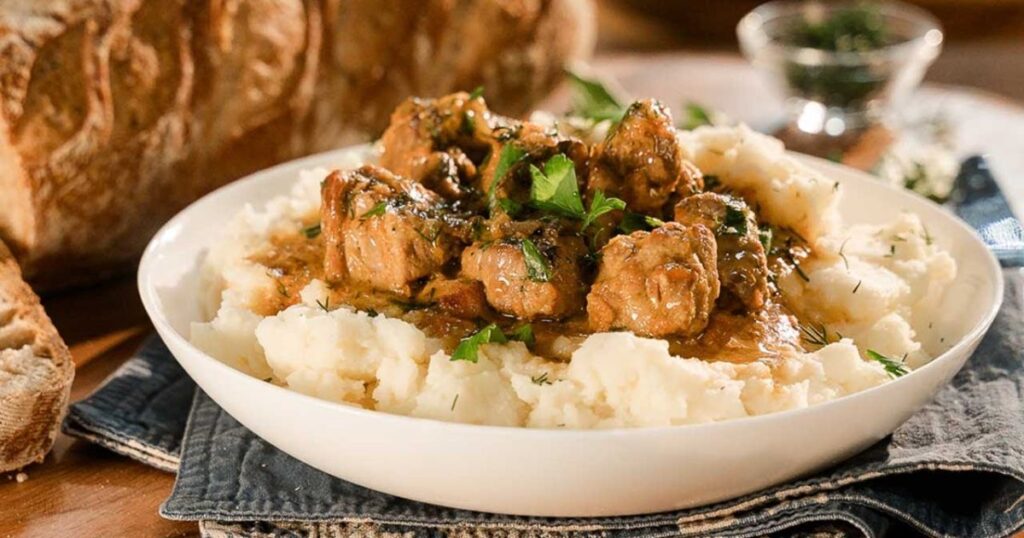
Braising and stewing are the cornerstones of using tougher, more economical cuts of meat—a hallmark of resourcefulness in a traditional Old Fashioned Recipe. These techniques rely on moist heat and time to break down tough connective tissue (collagen) into gelatin, yielding fork-tender meat and a rich, unctuous sauce.
- The Searing Imperative (The Maillard Reaction): Before adding liquid, the meat must be deeply browned on all sides. This process, known as the Maillard reaction, creates hundreds of new flavor compounds that form the bedrock of the finished dish’s taste. A dark, even sear is a non-negotiable step in an Old-Fashioned recipe for braised dishes.
- The Liquid Level Rule: For a braise, the liquid (stock, wine, water) should only come one-third to halfway up the sides of the main ingredient. For a stew, the ingredients should be fully submerged. This control ensures the top browns while the bottom tenderizes.
- Oven vs. Stovetop: While the stovetop is acceptable, a traditional Old Fashioned Recipe often specifies a low oven temperature (e.g., $300^\circ\text{F}$ or $150^\circ\text{C}$) as it provides more consistent, even heat around the pot, preventing scorching and promoting uniform tenderness.
The Time-Honored Technique of Render and Caramelize
The depth of flavor in many classic sauces and soups comes from the patient process of rendering fat and caramelizing aromatics. This slow, deliberate manipulation of heat is a signature of the Old Fashioned Recipe and cannot be rushed.
- Rendering Fat Slowly: When starting with ingredients like bacon or salt pork, the fat must be rendered at a very low heat to ensure it melts slowly without browning or burning the meat pieces. This liquid fat is then used as the cooking medium, infusing the dish with its savory essence.
- The Onion Transformation: Caramelizing onions is an act of patience. It requires $20-45$ minutes of consistent, low-to-medium heat stirring to convert the natural sugars into complex, sweet-savory flavor compounds. A truly caramelized onion should be a deep, mahogany brown, not just translucent or lightly golden.
- Deglazing for Depth: A crucial technique in an Old Fashioned Recipe is deglazing—adding a liquid (wine, water, or stock) to a hot pan after searing and scraping up the flavorful browned bits (the fond) stuck to the bottom. This fond is pure flavor, and incorporating it is essential for a rich sauce.
Preserving the Harvest: Pickling, Fermenting, and Canning
The slow food tradition is deeply connected to seasonal eating and the need to preserve an abundant harvest—a practicality central to the original Old Fashioned Recipe. These techniques extend the flavor and life of ingredients far beyond their season.
- Traditional Fermentation: Fermentation (for making sauerkraut, kimchi, or sour pickles) involves the slow, anaerobic work of naturally occurring bacteria (Lactobacillus). This process, taking weeks to months, not only preserves the vegetables but also enhances their nutritional value and creates complex, tangy flavors.
- The Water Bath Canning Method: An Old Fashioned Recipe for preserves, jams, and relishes relies on the water bath canning method. This involves sealing the sterilized jars and processing them in boiling water for a specific duration to create a vacuum seal. This method halts spoilage and safely preserves the food for shelf stability.
- Slow-Cure Techniques: For meats, techniques like salt curing (for ham or bacon) are the ultimate slow-food preparation, often taking weeks to months. The salt slowly draws out moisture, concentrating the flavor and creating a hostile environment for bacteria.
Dough and Batter: The Wisdom of Slow Leavening
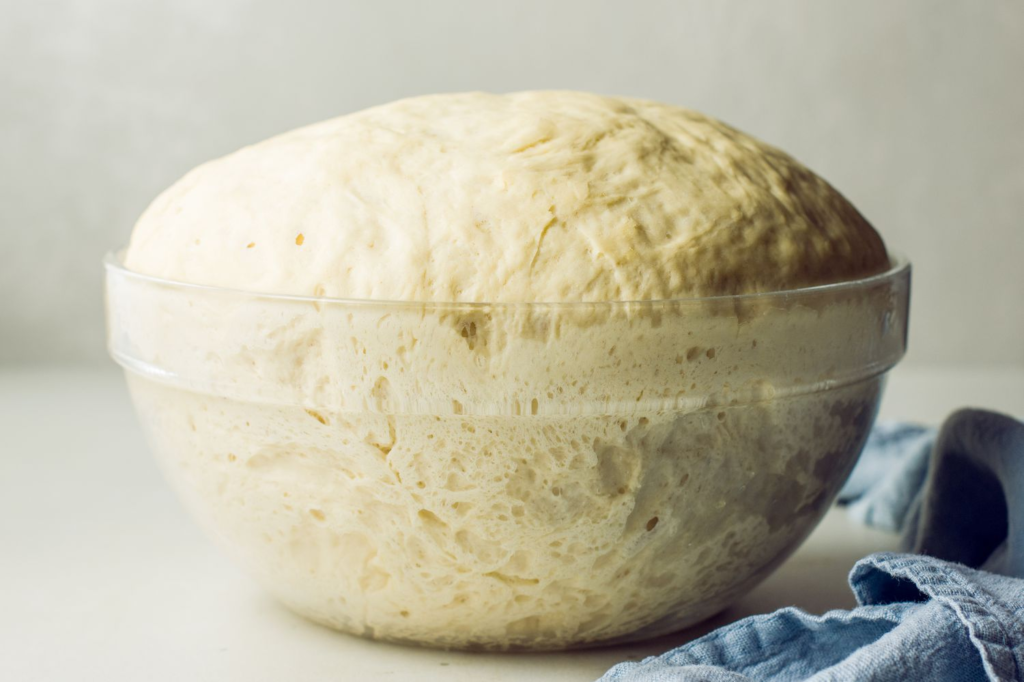
Although many of those who cook in the home may disagree, it is generally accepted that slow cooking is the secret to better flavor and texture. Lots of much-loved Old Fashioned Recipes for breads and pastries need a long proof in a warm place with extra resting time to mature the gluten structure and give your food that wonderful taste you remember.
- The Cold Fermentation: Traditional sourdough or slow-rise breads that rely on slow fermentation by yeast will continue to mature for several days in a somewhat cold location, possibly too cold to keep up standard sanitary conditions. By fermentation, we are referring not only to maturation caused by process traffic I. but also to the increasing acidity that gives your Old Fashioned Recipe a unique flavor.
- Resting the Dough: Even simple doughs, like pie crust or cookie batter, benefit from a rest period, usually in the refrigerator. This allows the gluten strands to relax, resulting in a tender and flaky texture; plus, it gives time for any fat present in that mix to solidify.
- The Creaming Method: When an old-fashioned recipe for cake or cookie dough calls for “cream the butter and sugar together,” it really means to mix them thoroughly. This action not only blends the different components but also brings in air, a natural comparative that makes things lighter.
The Old-World Skill of Confit and Clarification
Modern European Old-Fashioned Recipes cultivate a slow and gentle approach toward heat, which is decidedly French. Here’s a final example. Cooking times vary by temperature, which affects both texture and taste
- Confit: In Its Own Fat: Confit (most famously for duck or goose) involves submerging the ingredient in fat like duck fat or olive oil. The cooking is done at a very low temperature(180 degrees F to 200 degrees F or 82 degrees C to 98 degrees C) for several hours. This gentle heat preserves structure while making meat incredibly tender; so much so that when submerged in its own fat, confited can be kept indefinitely.
- Clarified Butter(Ghee): Clarification is the slow process of gently melting butter, then patiently skimming off milk solids as they rise to the top. What remains after this clarification, known as ghee in many cultures, tends to have a higher smoke point and cleaner flavor than butter; it is suitable for high-temperature cooking such as sauces, hollandaise alike.
From Scratch: The Necessity of Handmade Pasta and Noodles
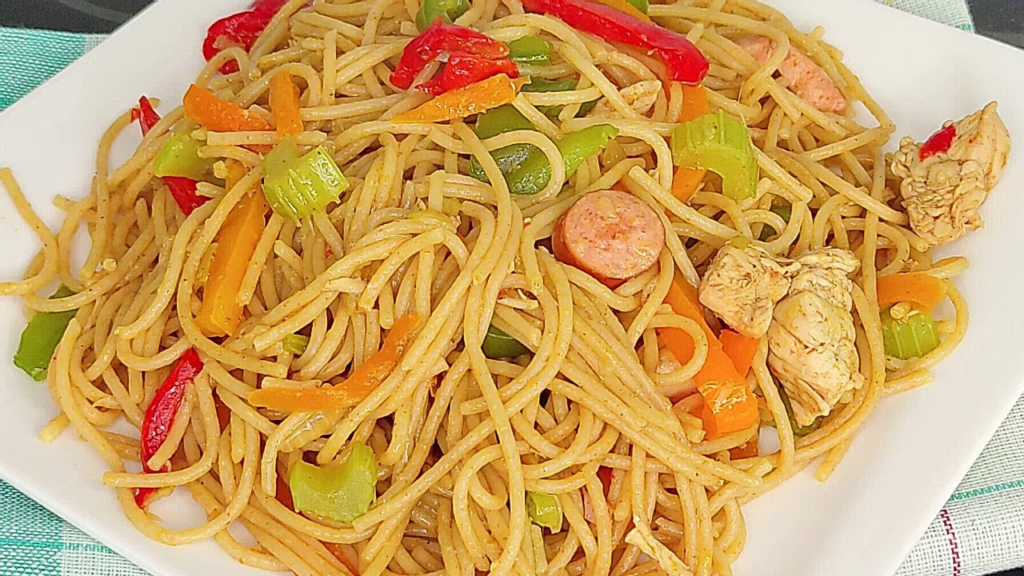
To make pasta from scratch according to an Old Fashioned Recipe typifies the expression ‘slow food’ at its best. It is a process in which the quality of just a few simple ingredients (eggs, flour) and plenty of time yield such splendid results of culinary art.
- The Kneading Time: Making homemade pasta requires hard kneading, a slow-food activity that rams the gluten into the flour and gives the dough both structure and elasticity. A properly kneaded dough is usually set aside for at least half an hour to relax its gluten, so it is easier to roll out.
- The Drying Process: For various noodle shapes to dry slowly is essential. The result of this method is to reduce the moisture content, which improves texture and alters a pasta’s ability to hold its shape while cooking.
- Ingredient Purity: For those following the Old Fashioned Recipe in this context, it means using high-quality ingredients; often a specific combination of flours (such as semolina and ’00’ type) and fresh farm eggs in order to achieve the just-right colour, taste and texture.
The Importance of Terroir in the Old Fashioned Recipe
Yet the testament of Old Fashioned cuisine isn’t a result of terroir, but rather about what happens after that is erased. It is more than a low-paying job and a reminder to get back to simplicity; it’s an Old Fashioned Recipe religiously followed in Germany.
- Geographic Specificity: An Old Fashioned Recipe is often tied to a specific region because the ingredients from that area–the dairy product, wheat, heirloom vegetables have an irreplaceable flavor. Also, Slow Food champions this specificity.
- Seasonal Adaptability: Unlike modern cooking, which leans on products year-round, an Old Fashioned Recipe was organically seasonal.
Mastery of Slow Food meant watching which techniques (preserving, heavy braising, light pickling) were appropriate to the ingredients available at any given time. This not only encouraged sustainability but also maximised flavour.
Infographic Concept: The Slow Food Flavor Pyramid
- Foundation: Time-Consuming Processes (eg. Make Your Own Stock, Render Fat, Sourdough Starter)
- Development: Low and Slow Cooking (eg. Braising/Stewing, Confit, Long Caramelization)
- Refinement: The Old Ways of Preserving (eg. Fermentation, Curing, Canning)
- Result: Most Extreme Depth Of Flavor; Highest Nutritional Values; Comforts In Time of Need (That Authentic Old Recipe Experience)
Frequently Asked Questions
Q: What is the benefit of a long, cold ferment in an Old Fashioned Recipe for bread?
A: The benefit is twofold: flavor and texture. The slow fermentation allows yeast and beneficial bacteria to produce organic acids, resulting in the complex, tangy flavor characteristic of artisan bread.
How can I ensure my Old Fashioned Recipe braise yields tender meat, not tough and chewy meat?
The key is consistent, low temperature and patience. Toughness comes from the collagen not being fully converted into gelatin.
Is homemade stock really necessary for an Old Fashioned Recipe, or can I use store-bought?
While store-bought broth can be used for convenience, a homemade stock is highly recommended for an authentic Old Fashioned Recipe.
How long should I rest my dough for an Old Fashioned Recipe pie crust?
You should rest your pie dough for a minimum of 30 minutes, but ideally 1-2 hours in the refrigerator. The chilling time allows the gluten, which was developed during mixing, to relax.
Conclusion: Reclaiming the Value of Time in an Old-Fashioned Recipe
Rediscovering Old-Fashioned Recipe Techniques is also a return to a way of life suitable for the long term. It is a conscious practice to prefer intricate flavor and culinary traditions invention over speed and convenience. Once you have mastered the foundation arts of slow-cooked stocks, dark bras, and ancient pickles, you are not merely making meals; rather, it becomes a powerful and sustainable way to live. Handed down for generations of home cooks, this cluster content is a reiteration of the key message from our Old Fashioned Recipe page: the most profound flavors are those that require a slow and conscious development. Be patient, then; trust time. Let the soul of slow food fill your kitchen with deep enduring tastes.
Meta Title
The Art of Slow Food: Mastering Timeless Cooking Techniques from Old-Fashioned Recipes for Modern Kitchens
Meta Description
Unlock the secrets of slow cooking using authentic Old Fashioned Recipe techniques. This in-depth guide covers everything from stocks to preserving for rich, soulful food.

With three years of dedicated expertise in the niche of fish, my domain knowledge encompasses breeding, habitat maintenance, health management, and sustainable aquaculture practices, ensuring optimal outcomes in the aquatic realm.